
Padel Tournament
Padel Tournament
Fast-paced tournaments designed to connect
How It Works
Padel tournaments are suitable for players who already know how to play. You don't need to be particularly experienced or skilled to join a tournament, but everyone should have a grip on the rules and basic techniques beforehand.
While padel is played in groups of four, there are a variety of fun tournament structures that work well for larger groups. In these formats, the matches are a lot shorter, typically around 10 minutes, after which the player compositions change.
Formats:
Americano The most popular tournament style. Opponents and partners change after every match, with scoring in a table and one person winning in the end. The Americano is an ideal social mixer.
Mexicano Similar to an Americano, but with matchups that reflect skill level. Different to Americano, Mexicano does not guarantee that everyone plays with and against everyone, but the structure can lead to more balanced matches.
Golden Court Partners stay the same, but face different opponents, depending on if they won or lost the previous match. The duo that wins the final match on the Golden Court is the winner. Golden Court is especially suitable for groups with different skill levels.
What is padel?
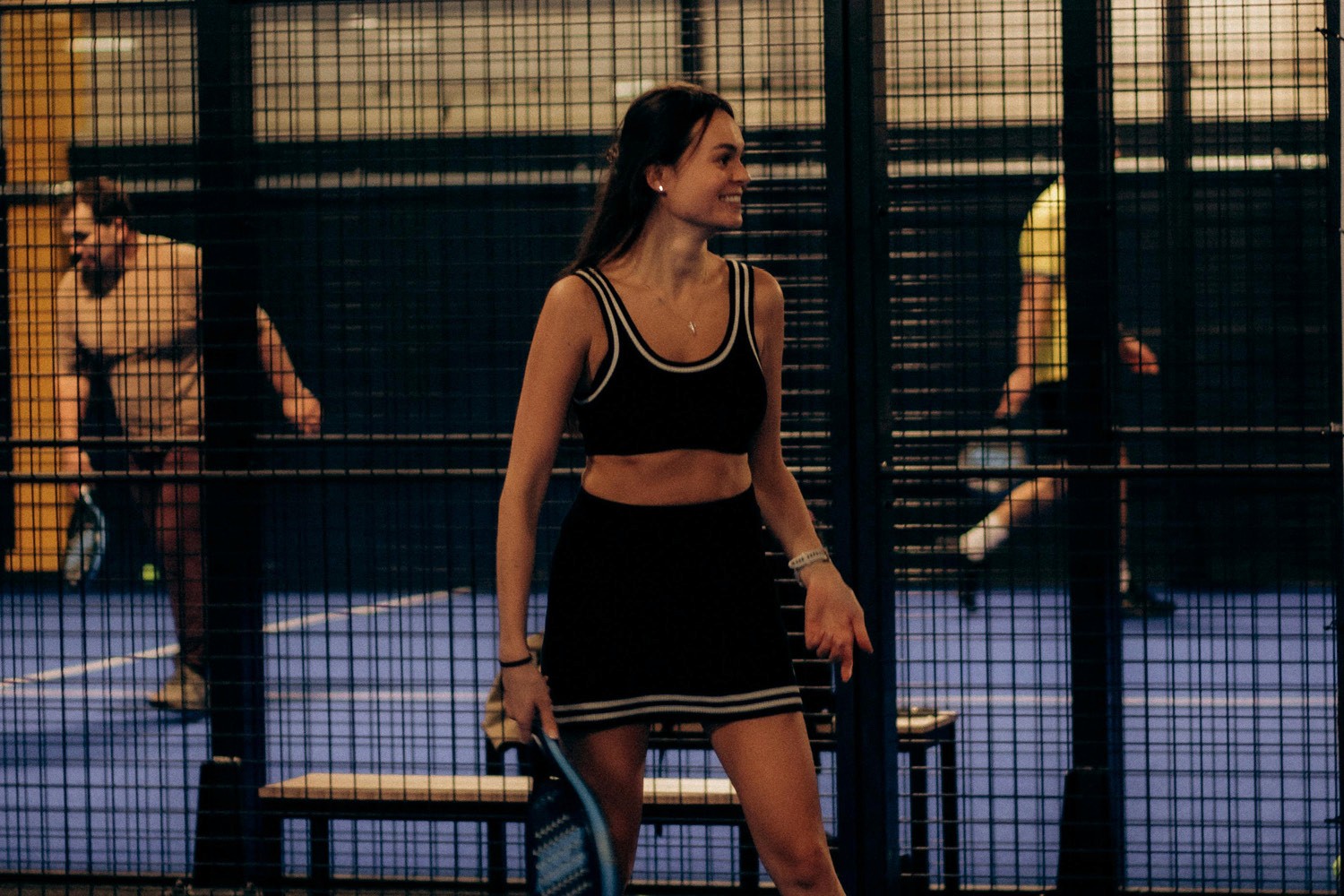
Padel is a mix between tennis and squash. It is played in doubles with two major differences compared to tennis: the courts are smaller and surrounded by glass and grid. The amazing thing: the glass walls are part of the game and can be used to score points!
-> This video provides a nice introduction
Why is it the perfect vehicle for flow and team spirit?
Padel is easy to learn. And hard to master. That balance makes it a natural fit for flow, which is most likely to emerge when a task challenges us just beyond our current level of comfort.
The sport is defined by dynamic, fast-paced and often surprisingly long rallies that demand constant attention and can pull players deeply into the moment. Intuition, focus, coordination, creativity, fun and shared momentum are essential to both padel and flow.
At the same time, padel is inherently social: partners need to communicate, adapt and move as a unit. That makes it a natural team-building activity.
It is possible to offer both padel and pilates, making for an activity that combines sports & competition with wellbeing & mindfulness, while offering something for participants who don't enjoy racket sports.
Padel Tournament
Fast-paced tournaments designed to connect
How It Works
Padel tournaments are suitable for players who already know how to play. You don't need to be particularly experienced or skilled to join a tournament, but everyone should have a grip on the rules and basic techniques beforehand.
While padel is played in groups of four, there are a variety of fun tournament structures that work well for larger groups. In these formats, the matches are a lot shorter, typically around 10 minutes, after which the player compositions change.
Formats:
Americano The most popular tournament style. Opponents and partners change after every match, with scoring in a table and one person winning in the end. The Americano is an ideal social mixer.
Mexicano Similar to an Americano, but with matchups that reflect skill level. Different to Americano, Mexicano does not guarantee that everyone plays with and against everyone, but the structure can lead to more balanced matches.
Golden Court Partners stay the same, but face different opponents, depending on if they won or lost the previous match. The duo that wins the final match on the Golden Court is the winner. Golden Court is especially suitable for groups with different skill levels.
What is padel?
Padel is a mix between tennis and squash. It is played in doubles with two major differences compared to tennis: the courts are smaller and surrounded by glass and grid. The amazing thing: the glass walls are part of the game and can be used to score points!
-> This video provides a nice introduction
Why is it the perfect vehicle for flow and team spirit?
Padel is easy to learn. And hard to master. That balance makes it a natural fit for flow, which is most likely to emerge when a task challenges us just beyond our current level of comfort.
The sport is defined by dynamic, fast-paced and often surprisingly long rallies that demand constant attention and can pull players deeply into the moment. Intuition, focus, coordination, creativity, fun and shared momentum are essential to both padel and flow.
At the same time, padel is inherently social: partners need to communicate, adapt and move as a unit. That makes it a natural team-building activity.
It is possible to offer both padel and pilates, making for an activity that combines sports & competition with wellbeing & mindfulness, while offering something for participants who don't enjoy racket sports.
Padel Tournament
Fast-paced tournaments designed to connect
How It Works
Padel tournaments are suitable for players who already know how to play. You don't need to be particularly experienced or skilled to join a tournament, but everyone should have a grip on the rules and basic techniques beforehand.
While padel is played in groups of four, there are a variety of fun tournament structures that work well for larger groups. In these formats, the matches are a lot shorter, typically around 10 minutes, after which the player compositions change.
Formats:
Americano The most popular tournament style. Opponents and partners change after every match, with scoring in a table and one person winning in the end. The Americano is an ideal social mixer.
Mexicano Similar to an Americano, but with matchups that reflect skill level. Different to Americano, Mexicano does not guarantee that everyone plays with and against everyone, but the structure can lead to more balanced matches.
Golden Court Partners stay the same, but face different opponents, depending on if they won or lost the previous match. The duo that wins the final match on the Golden Court is the winner. Golden Court is especially suitable for groups with different skill levels.
What is padel?
Padel is a mix between tennis and squash. It is played in doubles with two major differences compared to tennis: the courts are smaller and surrounded by glass and grid. The amazing thing: the glass walls are part of the game and can be used to score points!
-> This video provides a nice introduction
Why is it the perfect vehicle for flow and team spirit?
Padel is easy to learn. And hard to master. That balance makes it a natural fit for flow, which is most likely to emerge when a task challenges us just beyond our current level of comfort.
The sport is defined by dynamic, fast-paced and often surprisingly long rallies that demand constant attention and can pull players deeply into the moment. Intuition, focus, coordination, creativity, fun and shared momentum are essential to both padel and flow.
At the same time, padel is inherently social: partners need to communicate, adapt and move as a unit. That makes it a natural team-building activity.
It is possible to offer both padel and pilates, making for an activity that combines sports & competition with wellbeing & mindfulness, while offering something for participants who don't enjoy racket sports.